
One of the easiest ways to get sick when traveling is through contaminated water. Whether it’s a simple case of traveler’s diarrhea or something worse, like amoebic dysentery, it’s hard to enjoy yourself when you’re spending most of your time on the toilet.
You may find yourself in a rural area without access to clean drinking water or you may find yourself in a city where the tap water is unfit to drink and you don’t want to blow all your money on bottled water (to see if the water is safe to drink at your destination, have a look at canidrinkthewater.org – update: this site seems to no longer be active. Anyone know of a site that has this information? You can of course always do a search for your specific destination). Here are four ways that you can effectively treat water.
Step One: Filter your Water
Before using any of the treatment techniques below, you should filter the water if it’s cloudy or if it contains sediment or suspended particles. Filtering water will make the treatment options below far more effective and it will also help to eliminate many of the larger pathogens in the water like Giardia. To filter the water, you can use a product like the SteriPEN FitsAll Filter. If you don’t have a filter, you can get the job done with a coffee filter, cheesecloth, or even a towel.
A note about filters: Some people consider certain filters to be an adequate means of treatment. While it’s true that many filters, like the Lifestraw for example, will remove amoebas, bacteria and all manner of worms — filters do not remove viruses as the pore sizes are simply not small enough. Depending on where you are traveling, viruses may be rare in the water supply and you may consider using a filter for your treatment. We will not recommend filters as a stand-alone treatment option here, however, as they are limited in this regard.
Boiling
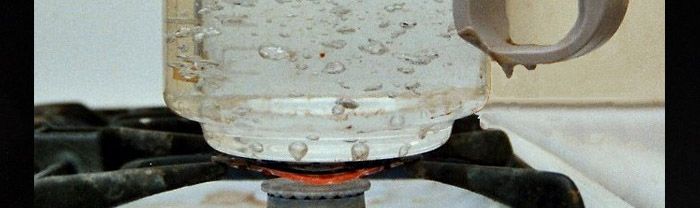
If done properly, boiling water can effectively kill all microbial life. If done properly? How can you screw it up? If you don’t boil the water long enough. Boil the water for at least three minutes. If you are over 5,000 feet above sea level, boil the water for five minutes. For every additional 1,000 feet after 5,000, add another minute of boiling time.
Chemical Treatment
Iodine and Chlorine are two options for treating water. While both are effective agents in water treatment, it is important to mention that neither is considered 100% effective against Cryptosporidiosis, a protozoan parasite that can cause severe diarrhea. Chlorine Dioxide, however, is effective in killing this parasite (we recommend these tablets below).
Chlorine
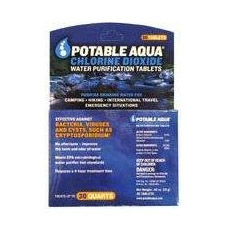 Chlorine dioxide is an effective agent in killing microbial life. It can also improve the taste and odor of water. If used with proper dosage, the chlorine taste and smell should not be offensive. You can buy chlorine tablets at camping stores or online at amazon.com. Potable Aqua Chlorine DioxideTablets are a good option, because they contain Chlorine Dioxide, making them effective against all pathogens, including Cryptosporidiosis. Read the directions on the box before using them (they can take up to 4 hours to treat your water).
If you don’t have chlorine tablets, you can also use non-scented bleach. Yes, really. Household bleach is typically 5-6 percent chlorine. Make sure you do not use any scented or perfumed bleach, however. Three drops per liter of water (five if the water is very cold) and then let it sit for 30 minutes (60 minutes if the water is cold).
Iodine
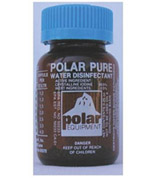 Iodine is another effective agent that can be used to disinfect water. Compared to chlorine, iodine produces a more noticeable aftertaste. One advantage, however, is you don’t need a lot of it to get the job done.
Potable Aqua Water Treatment Tablets, for instance, can treat a liter of water with one tablet. These are the same tablets that are actually endorsed by the US military and they are also commonly used by many backpackers and campers.
Keep in mind that some people are allergic to iodine. If this is the case, use one of the other treatment methods. Iodine is light sensitive and it should always be kept in a dark bottle. Also, iodine is not 100% effective against Cryptosporidiosis. Iodine tip: to remove the foul taste of Iodine add 50mg of vitamin C to the treated water. It will remove the iodine smell and taste.
UV Light Treatment
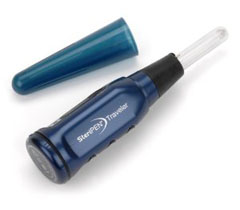 UV light destroys the DNA of harmful organisms, making your water safe to drink. There are many advantages to UV treatment. For one, there is no need to wait a substantial amount of time. Sixteen ounces of water can be treated in less than a minute. Another advantage is that there is no chemical aftertaste (and there is the fact that you don’t have to ingest any chemicals of course).
We recommend the SteriPEN Adventurer Opti Personal Handheld UV Water Purifier for UV treatment. It is compact and easy to use. Put the purifier into the water, press a button, and stir until the light turns green. It uses four AA batteries.
UV treatment, for its effectiveness and convenience, is the option we recommend. It is very important, however, that you filter your water before using UV treatment. Cloudy water or water with sediment and suspended particles, will dramatically reduce the effectiveness of UV treatment. If the water is clear, however, UV treatment can effectively neutralize everything, including viruses and Cryptosporidiosis.
For more general information on water purification and treatment, check out waterpurificationhq.com.
Have you used any of the above treatment options? Which do you prefer? Let us know in the comments. Photo credits: http://www.flickr.com/photos/indi/




{ 8 comments… add one }
this is real good for tips on how to survive the apocalypse.
heh, yeah, that’s one way to look at it.
I am traveling in Senegal, The Gambia, and Guinea for about three months. The group I am going with has recommended Iodine Tablets and Neutralizer to get rid of the taste. How do you feel about that method to treat water? I am also planning to bring a SteriPEN, but honestly, I am a little unsure about its effectiveness. Really all I would need to do is leave it in a Nalgene for about a minute, and it will be safe to drink?
Hey Zach,
I have used the SteriPEN traveler extensively in West Africa and it is excellent provided the water is clear. As I said in the article, I use a steripen filter first if I have any doubt. But yes, it only takes about a minute and the water will be safe to drink. My only recommendation would be to test it out before you go and make sure everything is working order. What is the purpose of your trip? I live most of the year in Mali and Ivory Coast, and have spent some time in Senegal. Have a great trip!!
Was just thinking about this stuff, Phil. Rescheduled a trip to India for next year. Don’t have all of my plans set yet, so I don’t know if I’ll be roughing it. Glad to hear the SteriPEN really works, though!
Just came back from 5 months in Mexico. I considered the Steripen, but was put off by the need for batteries and reviews of malfunction. I ended up buying the First Need Elite filter, which is usually used for camping. It filters viruses and all pathogens, according to the literature, and also has good reviews from users. It’s durable, easy to use, and seems effective. I won’t say I never got sick, but I don’t think it was from the water. This unit filters out everything, so that tap water is tasteless and odorless without using chemicals.
The downside is that the unit weighs a pound and is more bulky than tablets or a Steripen. Still, I’m really happy with it, and will use it on my trip to South America next year.
Hey Kate,
Thanks for the comment. We look forward to checking out this filter. Are you sure it filters all viruses, though? That is impressive.
Cheers,
Phil
I absolutely rely on my First Need Elite XLE water purifier from General Ecology. After a lot of research, I settled on this because it purportedly removes all organic matter and viruses plus other impurities, such as pesticides, heavy metals, and general gunk. On a 5-month trip to Mexico, I used this filter every day. It routinely turned discolored and/or smelly water into tasteless, colorless, safe drinking water, which the Steripen alone can’t do. Plus, I never worried about running out of water, although I did have to carry a plastic cup to hold the water I was purifying. Most budget hostels don’t give you drinking cups.
I did get sick three times, but I’m pretty sure it was from things I ate.
The First Need weighs one pound (.45 kilos) and is a small bulk to pack, but I won’t leave home without it. I’m leaving for South America in a week, and I have my First Need ready to go.